•  

Rite at Ise Jingu shrine in Mie Pref.

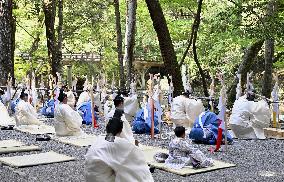
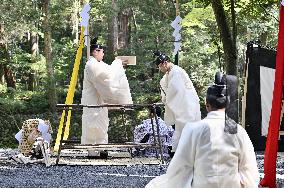
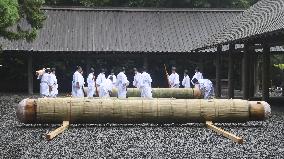
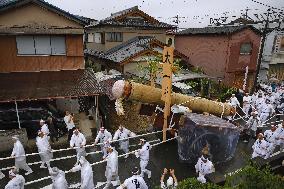
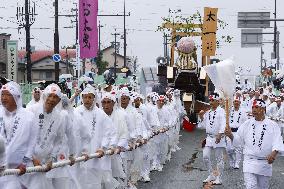
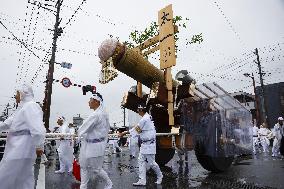
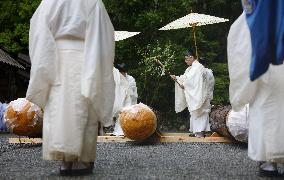
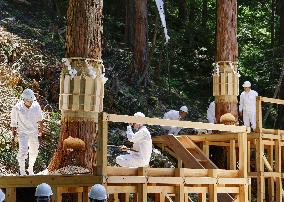
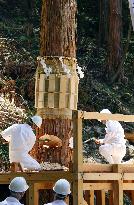
ISE, Japan, Sept. 17 Kyodo - Priests attend a tree-felling ceremony at Ise Jingu shrine in Ise, Mie Prefecture, on Sept. 17, 2025, as part of rites for the "Shikinen Sengu" shrine building reconstruction every 20 years at the Shinto shrine in the central Japan city. Over 30 rites are planned for the 63rd "Shikinen Sengu," with a history of about 1,300 years, which will culminate in 2033 when an object believed to contain the spirit of the shrine's deity will be transferred to the shrine's newly reconstructed main hall. (Kyodo)

  •  
Rite at Ise Jingu shrine in Mie Pref.

Rite at Ise Jingu shrine in Mie Pref.

Priests attend a tree-felling ceremony at Ise Jingu shrine in Ise, Mie Prefecture, on Sept. 17, 2025, as part of rites for the "Shikinen Sengu" shrine building reconstruction every 20 years at the Shinto shrine in the central Japan city. Over 30 rites are planned for the 63rd "Shikinen Sengu," with a history of about 1,300 years, which will culminate in 2033 when an object believed to contain the spirit of the shrine's deity will be transferred to the shrine's newly reconstructed main hall.

  •  
Rite at Ise Jingu shrine in Mie Pref.

Rite at Ise Jingu shrine in Mie Pref.

Priests attend a tree-felling ceremony at Ise Jingu shrine in Ise, Mie Prefecture, on Sept. 17, 2025, as part of rites for the "Shikinen Sengu" shrine building reconstruction every 20 years at the Shinto shrine in the central Japan city. Over 30 rites are planned for the 63rd "Shikinen Sengu," with a history of about 1,300 years, which will culminate in 2033 when an object believed to contain the spirit of the shrine's deity will be transferred to the shrine's newly reconstructed main hall.

  •  
Rite at Ise Jingu shrine in Mie Pref.

Rite at Ise Jingu shrine in Mie Pref.

Priests attend a tree-felling ceremony at Ise Jingu shrine in Ise, Mie Prefecture, on Sept. 17, 2025, as part of rites for the "Shikinen Sengu" shrine building reconstruction every 20 years at the Shinto shrine in the central Japan city. Over 30 rites are planned for the 63rd "Shikinen Sengu," with a history of about 1,300 years, which will culminate in 2033 when an object believed to contain the spirit of the shrine's deity will be transferred to the shrine's newly reconstructed main hall.

  •  
Rite at Ise Jingu shrine in Mie Pref.

Rite at Ise Jingu shrine in Mie Pref.

Priests attend a tree-felling ceremony at Ise Jingu shrine in Ise, Mie Prefecture, on Sept. 17, 2025, as part of rites for the "Shikinen Sengu" shrine building reconstruction every 20 years at the Shinto shrine in the central Japan city. Over 30 rites are planned for the 63rd "Shikinen Sengu," with a history of about 1,300 years, which will culminate in 2033 when an object believed to contain the spirit of the shrine's deity will be transferred to the shrine's newly reconstructed main hall.

  •  
Rite at Ise Jingu shrine in Mie Pref.

Rite at Ise Jingu shrine in Mie Pref.

Priests attend a tree-felling ceremony at Ise Jingu shrine in Ise, Mie Prefecture, on Sept. 17, 2025, as part of rites for the "Shikinen Sengu" shrine building reconstruction every 20 years at the Shinto shrine in the central Japan city. Over 30 rites are planned for the 63rd "Shikinen Sengu," with a history of about 1,300 years, which will culminate in 2033 when an object believed to contain the spirit of the shrine's deity will be transferred to the shrine's newly reconstructed main hall.

  •  
Rite at Ise Jingu shrine in Mie Pref.

Rite at Ise Jingu shrine in Mie Pref.

Priests attend a tree-felling ceremony at Ise Jingu shrine in Ise, Mie Prefecture, on Sept. 17, 2025, as part of rites for the "Shikinen Sengu" shrine building reconstruction every 20 years at the Shinto shrine in the central Japan city. Over 30 rites are planned for the 63rd "Shikinen Sengu," with a history of about 1,300 years, which will culminate in 2033 when an object believed to contain the spirit of the shrine's deity will be transferred to the shrine's newly reconstructed main hall.

  •  
Rite at Ise Jingu shrine in Mie Pref.

Rite at Ise Jingu shrine in Mie Pref.

Priests attend a tree-felling ceremony at Ise Jingu shrine in Ise, Mie Prefecture, on Sept. 17, 2025, as part of rites for the "Shikinen Sengu" shrine building reconstruction every 20 years at the Shinto shrine in the central Japan city. Over 30 rites are planned for the 63rd "Shikinen Sengu," with a history of about 1,300 years, which will culminate in 2033 when an object believed to contain the spirit of the shrine's deity will be transferred to the shrine's newly reconstructed main hall.

  •  
Rite at Ise Jingu shrine in Mie Pref.

Rite at Ise Jingu shrine in Mie Pref.

Priests attend a tree-felling ceremony at Ise Jingu shrine in Ise, Mie Prefecture, on Sept. 17, 2025, as part of rites for the "Shikinen Sengu" shrine building reconstruction every 20 years at the Shinto shrine in the central Japan city. Over 30 rites are planned for the 63rd "Shikinen Sengu," with a history of about 1,300 years, which will culminate in 2033 when an object believed to contain the spirit of the shrine's deity will be transferred to the shrine's newly reconstructed main hall.

  •  
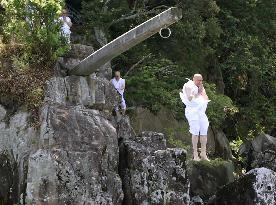
Lake-jumping religious ritual

Lake-jumping religious ritual

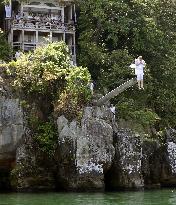
A Buddhist monk jumps into Lake Biwa from a height of about 7 meters in the Shiga Prefecture city of Omihachiman, western Japan, on Aug. 1, 2025, as he completes 100 days of mountain training. The traditional ritual at Isaki-ji temple dates back about 1,300 years.

  •  
Lake-jumping religious ritual

Lake-jumping religious ritual

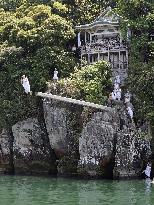
A Buddhist monk jumps into Lake Biwa from a height of about 7 meters in the Shiga Prefecture city of Omihachiman, western Japan, on Aug. 1, 2025, as he completes 100 days of mountain training. The traditional ritual at Isaki-ji temple dates back about 1,300 years.

  •  
Lake-jumping religious ritual

Lake-jumping religious ritual

A Buddhist monk jumps into Lake Biwa from a height of about 7 meters in the Shiga Prefecture city of Omihachiman, western Japan, on Aug. 1, 2025, as he completes 100 days of mountain training. The traditional ritual at Isaki-ji temple dates back about 1,300 years.

  •  

Rite at Ise Jingu shrine in Mie Pref.

ISE, Japan, June 12 Kyodo -Video taken on June 10, 2025, shows "sacred" trees at Ise Jingu shrine in Ise, Mie Prefecture, to be used in the "Shikinen Sengu" shrine reconstruction carried out every 20 years at the Shinto shrine in the central Japan city. Over 30 rites are planned for the 63rd "Shikinen Sengu" dating back about 1,300 years, which will culminate in 2033 when an object believed to contain the spirit of the shrine's deity will be transferred to the shrine's newly reconstructed main hall. (Kyodo)

  •  
Rite at Ise Jingu shrine in Mie Pref.

Rite at Ise Jingu shrine in Mie Pref.

Photo taken on June 10, 2025, shows "sacred" trees at Ise Jingu shrine in Ise, Mie Prefecture, to be used in the "Shikinen Sengu" shrine reconstruction carried out every 20 years at the Shinto shrine in the central Japan city. Over 30 rites are planned for the 63rd "Shikinen Sengu" dating back about 1,300 years, which will culminate in 2033 when an object believed to contain the spirit of the shrine's deity will be transferred to the shrine's newly reconstructed main hall.

  •  
Rite at Ise Jingu shrine in Mie Pref.

Rite at Ise Jingu shrine in Mie Pref.

Photo taken on June 10, 2025, shows "sacred" trees at Ise Jingu shrine in Ise, Mie Prefecture, to be used in the "Shikinen Sengu" shrine reconstruction carried out every 20 years at the Shinto shrine in the central Japan city. Over 30 rites are planned for the 63rd "Shikinen Sengu" dating back about 1,300 years, which will culminate in 2033 when an object believed to contain the spirit of the shrine's deity will be transferred to the shrine's newly reconstructed main hall.

  •  
Rite at Ise Jingu shrine in Mie Pref.

Rite at Ise Jingu shrine in Mie Pref.

Photo taken on June 10, 2025, shows a "sacred" tree at Ise Jingu shrine in Ise, Mie Prefecture, to be used in the "Shikinen Sengu" shrine reconstruction carried out every 20 years at the Shinto shrine in the central Japan city. Over 30 rites are planned for the 63rd "Shikinen Sengu" dating back about 1,300 years, which will culminate in 2033 when an object believed to contain the spirit of the shrine's deity will be transferred to the shrine's newly reconstructed main hall.

  •  
Rite at Ise Jingu shrine in Mie Pref.

Rite at Ise Jingu shrine in Mie Pref.

Photo taken on June 10, 2025, shows "sacred" trees at Ise Jingu shrine in Ise, Mie Prefecture, to be used in the "Shikinen Sengu" shrine reconstruction carried out every 20 years at the Shinto shrine in the central Japan city. Over 30 rites are planned for the 63rd "Shikinen Sengu" dating back about 1,300 years, which will culminate in 2033 when an object believed to contain the spirit of the shrine's deity will be transferred to the shrine's newly reconstructed main hall.

  •  
Rite at Ise Jingu shrine in Mie Pref.

Rite at Ise Jingu shrine in Mie Pref.

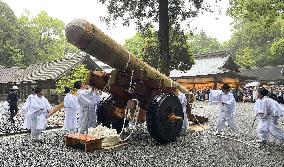
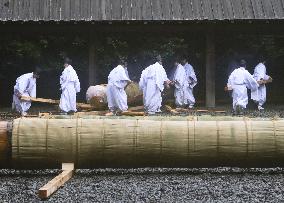
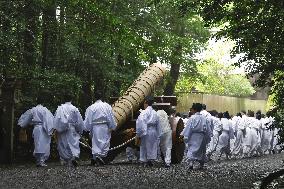
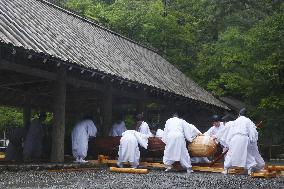
Priests transport a "sacred" tree in Ise, Mie Prefecture, on June 10, 2025, for use at Ise Jingu shrine in the "Shikinen Sengu" shrine reconstruction carried out every 20 years at the Shinto shrine in the central Japan city. Over 30 rites are planned for the 63rd "Shikinen Sengu" dating about 1,300 years, which will culminate in 2033 when an object believed to contain the spirit of the shrine's deity will be transferred to the shrine's newly reconstructed main hall.

  •  
Rite at Ise Jingu shrine in Mie Pref.

Rite at Ise Jingu shrine in Mie Pref.

Priests transport a "sacred" tree in Ise, Mie Prefecture, on June 10, 2025, for use at Ise Jingu shrine in the "Shikinen Sengu" shrine reconstruction carried out every 20 years at the Shinto shrine in the central Japan city. Over 30 rites are planned for the 63rd "Shikinen Sengu" dating about 1,300 years, which will culminate in 2033 when an object believed to contain the spirit of the shrine's deity will be transferred to the shrine's newly reconstructed main hall.

  •  
Rite at Ise Jingu shrine in Mie Pref.

Rite at Ise Jingu shrine in Mie Pref.

Priests transport a "sacred" tree in Ise, Mie Prefecture, on June 10, 2025, for use at Ise Jingu shrine in the "Shikinen Sengu" shrine reconstruction carried out every 20 years at the Shinto shrine in the central Japan city. Over 30 rites are planned for the 63rd "Shikinen Sengu" dating about 1,300 years, which will culminate in 2033 when an object believed to contain the spirit of the shrine's deity will be transferred to the shrine's newly reconstructed main hall.

  •  
Rite at Ise Jingu shrine in Mie Pref.

Rite at Ise Jingu shrine in Mie Pref.

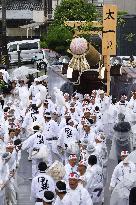
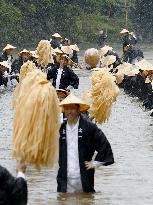
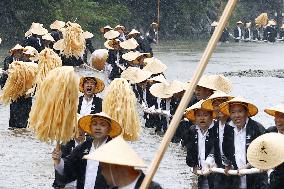
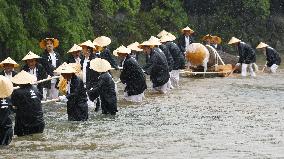
Citizens transport a "sacred" tree in Ise, Mie Prefecture, on June 10, 2025, for use at Ise Jingu shrine in the "Shikinen Sengu" shrine reconstruction carried out every 20 years at the Shinto shrine in the central Japan city. Over 30 rites are planned for the 63rd "Shikinen Sengu" dating about 1,300 years, which will culminate in 2033 when an object believed to contain the spirit of the shrine's deity will be transferred to the shrine's newly reconstructed main hall.

  •  
Rite at Ise Jingu shrine in Mie Pref.

Rite at Ise Jingu shrine in Mie Pref.

Citizens transport a "sacred" tree in Ise, Mie Prefecture, on June 10, 2025, for use at Ise Jingu shrine in the "Shikinen Sengu" shrine reconstruction carried out every 20 years at the Shinto shrine in the central Japan city. Over 30 rites are planned for the 63rd "Shikinen Sengu" dating about 1,300 years, which will culminate in 2033 when an object believed to contain the spirit of the shrine's deity will be transferred to the shrine's newly reconstructed main hall.

  •  
Rite at Ise Jingu shrine in Mie Pref.

Rite at Ise Jingu shrine in Mie Pref.

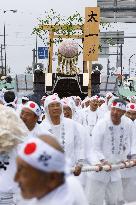
Citizens transport a "sacred" tree in Ise, Mie Prefecture, on June 10, 2025, for use at Ise Jingu shrine in the "Shikinen Sengu" shrine reconstruction carried out every 20 years at the Shinto shrine in the central Japan city. Over 30 rites are planned for the 63rd "Shikinen Sengu" dating about 1,300 years, which will culminate in 2033 when an object believed to contain the spirit of the shrine's deity will be transferred to the shrine's newly reconstructed main hall.

  •  
Rite at Ise Jingu shrine in Mie Pref.

Rite at Ise Jingu shrine in Mie Pref.

Citizens transport a "sacred" tree in Ise, Mie Prefecture, on June 10, 2025, for use at Ise Jingu shrine in the "Shikinen Sengu" shrine reconstruction carried out every 20 years at the Shinto shrine in the central Japan city. Over 30 rites are planned for the 63rd "Shikinen Sengu" dating about 1,300 years, which will culminate in 2033 when an object believed to contain the spirit of the shrine's deity will be transferred to the shrine's newly reconstructed main hall.

  •  
Rite at Ise Jingu shrine in Mie Pref.

Rite at Ise Jingu shrine in Mie Pref.

Citizens transport a "sacred" tree in Ise, Mie Prefecture, on June 10, 2025, for use at Ise Jingu shrine in the "Shikinen Sengu" shrine reconstruction carried out every 20 years at the Shinto shrine in the central Japan city. Over 30 rites are planned for the 63rd "Shikinen Sengu" dating about 1,300 years, which will culminate in 2033 when an object believed to contain the spirit of the shrine's deity will be transferred to the shrine's newly reconstructed main hall.

  •  
Rite at Ise Jingu shrine in Mie Pref.

Rite at Ise Jingu shrine in Mie Pref.

Citizens transport a "sacred" tree in Ise, Mie Prefecture, on June 10, 2025, for use at Ise Jingu shrine in the "Shikinen Sengu" shrine reconstruction carried out every 20 years at the Shinto shrine in the central Japan city. Over 30 rites are planned for the 63rd "Shikinen Sengu" dating about 1,300 years, which will culminate in 2033 when an object believed to contain the spirit of the shrine's deity will be transferred to the shrine's newly reconstructed main hall.

  •  

Rite at Ise Jingu shrine in Mie Pref.

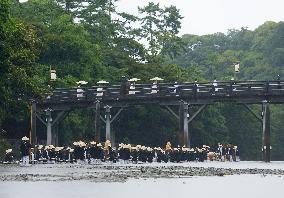
ISE, Japan, June 10 Kyodo - Priests purify sacred trees at Ise Jingu shrine in Ise, Mie Prefecture, on June 9, 2025, as part of rites for the "Shikinen Sengu" shrine building reconstruction every 20 years at the Shinto shrine in the central Japan city. Over 30 rites are planned for the 63rd "Shikinen Sengu," which will culminate in 2033 when an object believed to contain the spirit of the shrine's deity will be transferred to the shrine's newly reconstructed main hall. The reconstruction rites have a history of about 1,300 years. (Kyodo)

  •  
Rite at Ise Jingu shrine in Mie Pref.

Rite at Ise Jingu shrine in Mie Pref.

Priests purify sacred trees at Ise Jingu shrine in Ise, Mie Prefecture, on June 9, 2025, as part of rites for the "Shikinen Sengu" shrine building reconstruction every 20 years at the Shinto shrine in the central Japan city. Over 30 rites are planned for the 63rd "Shikinen Sengu," which will culminate in 2033 when an object believed to contain the spirit of the shrine's deity will be transferred to the shrine's newly reconstructed main hall. The reconstruction rites have a history of about 1,300 years.

  •  
Rite at Ise Jingu shrine in Mie Pref.

Rite at Ise Jingu shrine in Mie Pref.

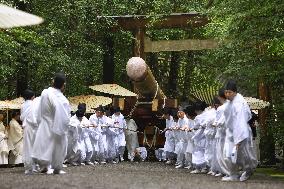
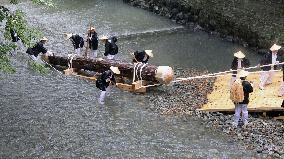
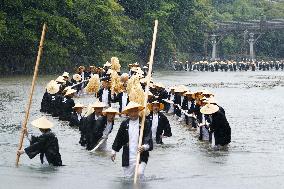
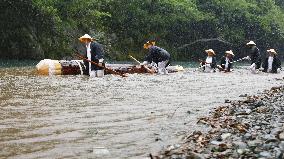
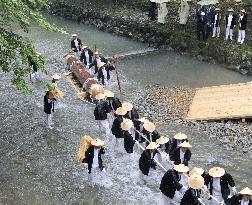
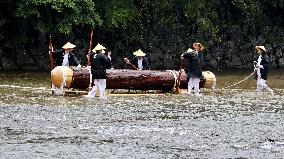
Ise Jingu shrine officials transport a "sacred" tree on the Isuzu River in Ise, Mie Prefecture, on June 9, 2025, as part of rites for the "Shikinen Sengu" shrine building reconstruction every 20 years at the Shinto shrine in the central Japan city. Over 30 rites are planned for the 63rd "Shikinen Sengu" with a history of about 1,300 years, which will culminate in 2033 when an object believed to contain the spirit of the shrine's deity will be transferred to the shrine's newly reconstructed main hall.

  •  
Rite at Ise Jingu shrine in Mie Pref.

Rite at Ise Jingu shrine in Mie Pref.

Ise Jingu shrine officials transport a "sacred" tree on the Isuzu River in Ise, Mie Prefecture, on June 9, 2025, as part of rites for the "Shikinen Sengu" shrine building reconstruction every 20 years at the Shinto shrine in the central Japan city. Over 30 rites are planned for the 63rd "Shikinen Sengu" with a history of about 1,300 years, which will culminate in 2033 when an object believed to contain the spirit of the shrine's deity will be transferred to the shrine's newly reconstructed main hall.

  •  
Rite at Ise Jingu shrine in Mie Pref.

Rite at Ise Jingu shrine in Mie Pref.

Ise Jingu shrine officials transport a "sacred" tree on the Isuzu River in Ise, Mie Prefecture, on June 9, 2025, as part of rites for the "Shikinen Sengu" shrine building reconstruction every 20 years at the Shinto shrine in the central Japan city. Over 30 rites are planned for the 63rd "Shikinen Sengu" with a history of about 1,300 years, which will culminate in 2033 when an object believed to contain the spirit of the shrine's deity will be transferred to the shrine's newly reconstructed main hall.

  •  
Rite at Ise Jingu shrine in Mie Pref.

Rite at Ise Jingu shrine in Mie Pref.

Ise Jingu shrine officials transport a "sacred" tree on the Isuzu River in Ise, Mie Prefecture, on June 9, 2025, as part of rites for the "Shikinen Sengu" shrine building reconstruction every 20 years at the Shinto shrine in the central Japan city. Over 30 rites are planned for the 63rd "Shikinen Sengu" with a history of about 1,300 years, which will culminate in 2033 when an object believed to contain the spirit of the shrine's deity will be transferred to the shrine's newly reconstructed main hall.

  •  
Rite at Ise Jingu shrine in Mie Pref.

Rite at Ise Jingu shrine in Mie Pref.

Ise Jingu shrine officials transport a "sacred" tree on the Isuzu River in Ise, Mie Prefecture, on June 9, 2025, as part of rites for the "Shikinen Sengu" shrine building reconstruction every 20 years at the Shinto shrine in the central Japan city. Over 30 rites are planned for the 63rd "Shikinen Sengu" with a history of about 1,300 years, which will culminate in 2033 when an object believed to contain the spirit of the shrine's deity will be transferred to the shrine's newly reconstructed main hall.

  •  
Rite at Ise Jingu shrine in Mie Pref.

Rite at Ise Jingu shrine in Mie Pref.

Priests purify a sacred tree at Ise Jingu shrine in Ise, Mie Prefecture, on June 9, 2025, as part of rites for the "Shikinen Sengu" shrine building reconstruction every 20 years at the Shinto shrine in the central Japan city. Over 30 rites are planned for the 63rd "Shikinen Sengu," which will culminate in 2033 when an object believed to contain the spirit of the shrine's deity will be transferred to the shrine's newly reconstructed main hall. The reconstruction rites have a history of about 1,300 years.

  •  
Rite at Ise Jingu shrine in Mie Pref.

Rite at Ise Jingu shrine in Mie Pref.

Ise Jingu shrine officials transport a "sacred" tree on the Isuzu River in Ise, Mie Prefecture, on June 9, 2025, as part of rites for the "Shikinen Sengu" shrine building reconstruction every 20 years at the Shinto shrine in the central Japan city. Over 30 rites are planned for the 63rd "Shikinen Sengu" with a history of about 1,300 years, which will culminate in 2033 when an object believed to contain the spirit of the shrine's deity will be transferred to the shrine's newly reconstructed main hall.

  •  
Rite at Ise Jingu shrine in Mie Pref.

Rite at Ise Jingu shrine in Mie Pref.

Ise Jingu shrine officials transport a "sacred" tree on the Isuzu River in Ise, Mie Prefecture, on June 9, 2025, as part of rites for the "Shikinen Sengu" shrine building reconstruction every 20 years at the Shinto shrine in the central Japan city. Over 30 rites are planned for the 63rd "Shikinen Sengu" with a history of about 1,300 years, which will culminate in 2033 when an object believed to contain the spirit of the shrine's deity will be transferred to the shrine's newly reconstructed main hall.

  •  
Rite at Ise Jingu shrine in Mie Pref.

Rite at Ise Jingu shrine in Mie Pref.

Ise Jingu shrine officials transport a "sacred" tree on the Isuzu River in Ise, Mie Prefecture, on June 9, 2025, as part of rites for the "Shikinen Sengu" shrine building reconstruction every 20 years at the Shinto shrine in the central Japan city. Over 30 rites are planned for the 63rd "Shikinen Sengu" with a history of about 1,300 years, which will culminate in 2033 when an object believed to contain the spirit of the shrine's deity will be transferred to the shrine's newly reconstructed main hall.

  •  
Rite at Ise Jingu shrine in Mie Pref.

Rite at Ise Jingu shrine in Mie Pref.

Ise Jingu shrine officials transport a "sacred" tree on the Isuzu River in Ise, Mie Prefecture, on June 9, 2025, as part of rites for the "Shikinen Sengu" shrine building reconstruction every 20 years at the Shinto shrine in the central Japan city. Over 30 rites are planned for the 63rd "Shikinen Sengu" with a history of about 1,300 years, which will culminate in 2033 when an object believed to contain the spirit of the shrine's deity will be transferred to the shrine's newly reconstructed main hall.

  •  
Tree-felling rite in central Japan

Tree-felling rite in central Japan

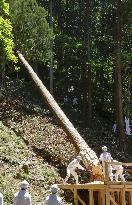
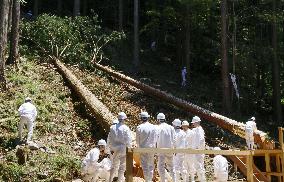
Woodcutters take part in a tree-felling rite in Nakatsugawa, Gifu Prefecture, on June 5, 2025, as part of rites for the "Shikinen Sengu" shrine building reconstruction every 20 years at Ise Jingu shrine in Ise in Mie Prefecture, in central Japan. Two Japanese cypress trees being cut will be transported to the Shinto shrine on June 9-10 for the 63rd "Shikinen Sengu" with a history of about 1,300 years, starting in 2033.

  •  
Tree-felling rite in central Japan

Tree-felling rite in central Japan

Woodcutters take part in a tree-felling rite in Nakatsugawa, Gifu Prefecture, on June 5, 2025, as part of rites for the "Shikinen Sengu" shrine building reconstruction every 20 years at Ise Jingu shrine in Ise in Mie Prefecture, in central Japan. Two Japanese cypress trees being cut will be transported to the Shinto shrine on June 9-10 for the 63rd "Shikinen Sengu" with a history of about 1,300 years, starting in 2033.

  •  
Tree-felling rite in central Japan

Tree-felling rite in central Japan

Woodcutters take part in a tree-felling rite in Nakatsugawa, Gifu Prefecture, on June 5, 2025, as part of rites for the "Shikinen Sengu" shrine building reconstruction every 20 years at Ise Jingu shrine in Ise in Mie Prefecture, in central Japan. Two Japanese cypress trees being cut will be transported to the Shinto shrine on June 9-10 for the 63rd "Shikinen Sengu" with a history of about 1,300 years, starting in 2033.

  •  
Tree-felling rite in central Japan

Tree-felling rite in central Japan

Woodcutters take part in a tree-felling rite in Nakatsugawa, Gifu Prefecture, on June 5, 2025, as part of rites for the "Shikinen Sengu" shrine building reconstruction every 20 years at Ise Jingu shrine in Ise in Mie Prefecture, in central Japan. Two Japanese cypress trees being cut will be transported to the Shinto shrine on June 9-10 for the 63rd "Shikinen Sengu" with a history of about 1,300 years, starting in 2033.

  •  
Okinawa to make signs more foreigner-friendly

Okinawa to make signs more foreigner-friendly

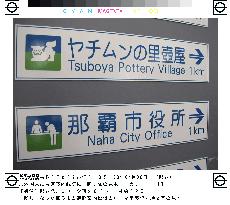
NAHA, Japan - Signs in Okinawa Prefecture written in Roman letters for foreigners will be changed to make them easier to understand. Tthe Cabinet Office's Okinawa General Bureau said April 9 it plans to change about 1,300 such signs within five years.

  •  

U.S. educators face unprecedented hardship after COVID-19 pandemic

STORY: U.S. educators face unprecedented hardship after COVID-19 pandemic DATELINE: Sept. 15, 2022 LENGTH: 00:01:03 LOCATION: NEW YORK, U.S. CATEGORY: EDUCATION SHOTLIST: 1. STANDUP(English): XIA LIN, Xinhua correspondent 2. a picture of a relevant online news 3. various of a public school STORYLINE: STANDUP(English): XIA LIN, Xinhua correspondent "Sixteen percent of U.S. educators are having trouble making rent or mortgage payments, up from 12 percent before the COVID-19 pandemic, the National Education Association has found. House rents are a common burden felt by teachers and other school employees nationwide. On average, monthly rents in the country have nearly doubled in the past 10 years, rising from about 700 dollars a month in 2012 to more than 1,300 dollars in 2022. 'The pandemic exacerbated educators' challenging working conditions, leaving school systems across the country struggling to retain teaching talent and forcing some to double as both employers and landlords,' said news portal Channel

  •  
(ZhejiangPictorial) CHINA-ZHEJIANG-QINGTIAN-RICE-FISH CO-CULTURE SYSTEM (CN)

(ZhejiangPictorial) CHINA-ZHEJIANG-QINGTIAN-RICE-FISH CO-CULTURE SYSTEM (CN)

(220719) -- QINGTIAN, July 19, 2022 (Xinhua) -- In this aerial photo, farmers carry buckets of fish fry before releasing them into rice fields in Xiaozhoushan Township, Qingtian County, east China's Zhejiang Province, June 11, 2020. The rice-fish co-culture system in Qingtian has a history of more than 1,300 years and was listed in the world's first group of the Globally Important Agricultural Heritage Systems (GIAHS) designated by the Food and Agriculture Organization of the United Nations (FAO) in 2005. Qingtian, in the southwestern part of Zhejiang, has sufficient water resources and a terraced landscape. The rice-fish co-culture system can bring handsome incomes to local farmers. In 2021, the rice-fish co-culture system in Qingtian covered around 3,700 hectares of paddy fields, with an average rice yield of 7.2 tonnes per hectare. The total output value of rice and fish reached 265 million yuan (about 39.3 million U.S. dollars). (Xinhua/Xu Yu)

  •  
(ZhejiangPictorial) CHINA-ZHEJIANG-QINGTIAN-RICE-FISH CO-CULTURE SYSTEM (CN)

(ZhejiangPictorial) CHINA-ZHEJIANG-QINGTIAN-RICE-FISH CO-CULTURE SYSTEM (CN)

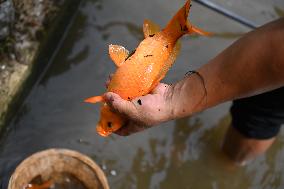
(220719) -- QINGTIAN, July 19, 2022 (Xinhua) -- Photo taken on July 19, 2022 shows a fish caught by a farmer in a protection area of the rice-fish co-culture system in Qingtian County, east China's Zhejiang Province. The rice-fish co-culture system in Qingtian has a history of more than 1,300 years and was listed in the world's first group of the Globally Important Agricultural Heritage Systems (GIAHS) designated by the Food and Agriculture Organization of the United Nations (FAO) in 2005. Qingtian, in the southwestern part of Zhejiang, has sufficient water resources and a terraced landscape. The rice-fish co-culture system can bring handsome incomes to local farmers. In 2021, the rice-fish co-culture system in Qingtian covered around 3,700 hectares of paddy fields, with an average rice yield of 7.2 tonnes per hectare. The total output value of rice and fish reached 265 million yuan (about 39.3 million U.S. dollars). (Xinhua/Huang Zongzhi)

  •  
(ZhejiangPictorial) CHINA-ZHEJIANG-QINGTIAN-RICE-FISH CO-CULTURE SYSTEM (CN)

(ZhejiangPictorial) CHINA-ZHEJIANG-QINGTIAN-RICE-FISH CO-CULTURE SYSTEM (CN)

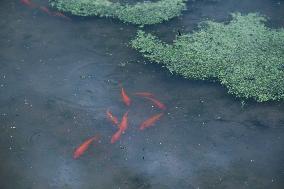
(220719) -- QINGTIAN, July 19, 2022 (Xinhua) -- Photo taken on July 18, 2022 shows fish swimming in a protection area of the rice-fish co-culture system in Qingtian County, east China's Zhejiang Province. The rice-fish co-culture system in Qingtian has a history of more than 1,300 years and was listed in the world's first group of the Globally Important Agricultural Heritage Systems (GIAHS) designated by the Food and Agriculture Organization of the United Nations (FAO) in 2005. Qingtian, in the southwestern part of Zhejiang, has sufficient water resources and a terraced landscape. The rice-fish co-culture system can bring handsome incomes to local farmers. In 2021, the rice-fish co-culture system in Qingtian covered around 3,700 hectares of paddy fields, with an average rice yield of 7.2 tonnes per hectare. The total output value of rice and fish reached 265 million yuan (about 39.3 million U.S. dollars). (Xinhua/Huang Zongzhi)

  •  
(ZhejiangPictorial) CHINA-ZHEJIANG-QINGTIAN-RICE-FISH CO-CULTURE SYSTEM (CN)

(ZhejiangPictorial) CHINA-ZHEJIANG-QINGTIAN-RICE-FISH CO-CULTURE SYSTEM (CN)

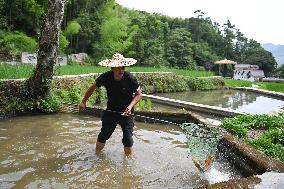
(220719) -- QINGTIAN, July 19, 2022 (Xinhua) -- A farmer catches fish in a protection area of the rice-fish co-culture system in Qingtian County, east China's Zhejiang Province, July 19, 2022. The rice-fish co-culture system in Qingtian has a history of more than 1,300 years and was listed in the world's first group of the Globally Important Agricultural Heritage Systems (GIAHS) designated by the Food and Agriculture Organization of the United Nations (FAO) in 2005. Qingtian, in the southwestern part of Zhejiang, has sufficient water resources and a terraced landscape. The rice-fish co-culture system can bring handsome incomes to local farmers. In 2021, the rice-fish co-culture system in Qingtian covered around 3,700 hectares of paddy fields, with an average rice yield of 7.2 tonnes per hectare. The total output value of rice and fish reached 265 million yuan (about 39.3 million U.S. dollars). (Xinhua/Huang Zongzhi)

  •  
(ZhejiangPictorial) CHINA-ZHEJIANG-QINGTIAN-RICE-FISH CO-CULTURE SYSTEM (CN)

(ZhejiangPictorial) CHINA-ZHEJIANG-QINGTIAN-RICE-FISH CO-CULTURE SYSTEM (CN)

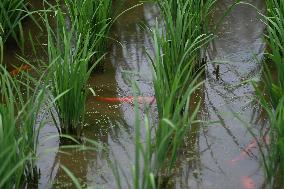
(220719) -- QINGTIAN, July 19, 2022 (Xinhua) -- Photo taken on June 11, 2020 shows fish swimming in a rice field in Xiaozhoushan Township, Qingtian County, east China's Zhejiang Province. The rice-fish co-culture system in Qingtian has a history of more than 1,300 years and was listed in the world's first group of the Globally Important Agricultural Heritage Systems (GIAHS) designated by the Food and Agriculture Organization of the United Nations (FAO) in 2005. Qingtian, in the southwestern part of Zhejiang, has sufficient water resources and a terraced landscape. The rice-fish co-culture system can bring handsome incomes to local farmers. In 2021, the rice-fish co-culture system in Qingtian covered around 3,700 hectares of paddy fields, with an average rice yield of 7.2 tonnes per hectare. The total output value of rice and fish reached 265 million yuan (about 39.3 million U.S. dollars). (Xinhua/Xu Yu)

  •  
(ZhejiangPictorial) CHINA-ZHEJIANG-QINGTIAN-RICE-FISH CO-CULTURE SYSTEM (CN)

(ZhejiangPictorial) CHINA-ZHEJIANG-QINGTIAN-RICE-FISH CO-CULTURE SYSTEM (CN)

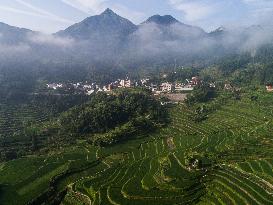
(220719) -- QINGTIAN, July 19, 2022 (Xinhua) -- Aerial photo taken on July 25, 2019 shows terraced rice fields in Xiaozhoushan Township, Qingtian County, east China's Zhejiang Province. The rice-fish co-culture system in Qingtian has a history of more than 1,300 years and was listed in the world's first group of the Globally Important Agricultural Heritage Systems (GIAHS) designated by the Food and Agriculture Organization of the United Nations (FAO) in 2005. Qingtian, in the southwestern part of Zhejiang, has sufficient water resources and a terraced landscape. The rice-fish co-culture system can bring handsome incomes to local farmers. In 2021, the rice-fish co-culture system in Qingtian covered around 3,700 hectares of paddy fields, with an average rice yield of 7.2 tonnes per hectare. The total output value of rice and fish reached 265 million yuan (about 39.3 million U.S. dollars). (Xinhua/Xu Yu)

  • Main
  • Top
  • Editorial
  • Creative
  • About Us
  • About ILG
  • Terms of use
  • Company
  • BEHIND
  • Price List
  • Single Plan
  • Monthly Plan
  • Services
  • Shooting
  • Rights Clearance
  • Support
  • FAQ
  • How To Buy
  • Contact Us
  • Become a Partner

© KYODO NEWS IMAGES INC

All Rights Reserved.

  • Editorial
  • Olympics
  • News
  • Sports
  • Japan
  • Tech
  • Royal
  • Disaster
  • NorthKorea
  • Old Japan
  • SNS
  • Creative
  • Food
  • Japan
  • Landscape
  • Animal
  • Popular
  • #Ukraine
  • #Russia
  • #coronavirus
  • #N. Korea
  • #Thailand
  • #China
  • #Ukraine
  • #Russia
  • #coronavirus
  • #N. Korea
  • #Thailand
  • #China
  • Food
  • Japan
  • Landscape
  • Animal
  • Olympics
  • News
  • Sports
  • Japan
  • Tech
  • Royal
  • Disaster
  • NorthKorea
  • Old Japan
  • SNS